

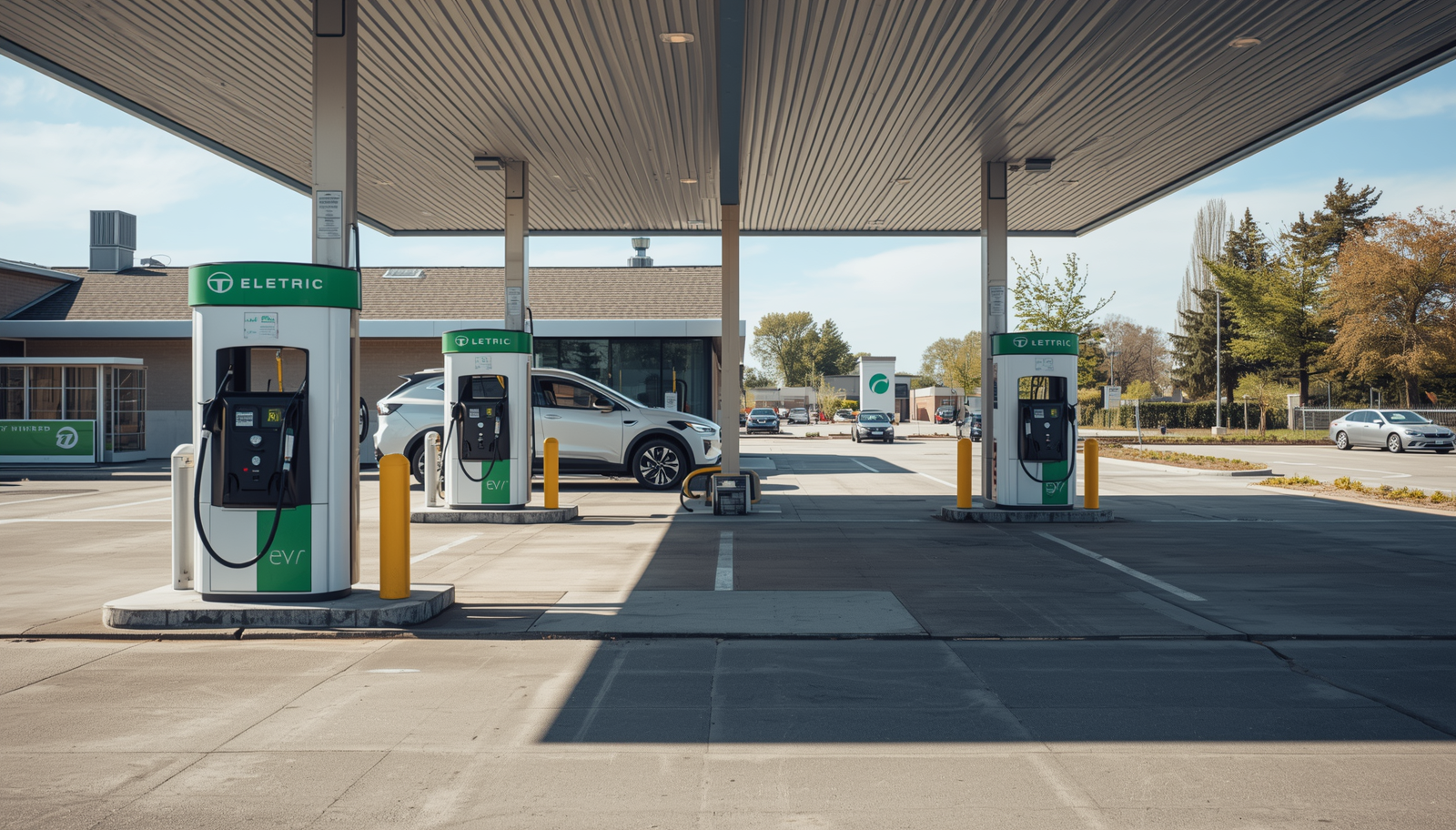
The Legacy Fuel Model Is Entering Operational Transition
The gas station has functioned as the dominant ground transportation infrastructure asset for more than seventy years. That position is now in active transition. The internal combustion vehicle is no longer the long-term operational anchor of personal and commercial mobility, and the environments built to service it are being evaluated on entirely new criteria.
The gas station reset is the structured repositioning of fuel retail environments into connected charging ecosystems. It is not a renovation. It is not a brand refresh. It is an operational evolution — from a single-fuel dispensing model into a multi-mode infrastructure node supporting electric vehicle charging, fleet electrification, and intelligent mobility coordination.
EV vendors, fleet operators, and commercial charging networks are actively recruiting fuel retail environments for this transition. The environments capable of supporting the operational requirements are entering long-term infrastructure participation. The environments unable to support those requirements are facing a different outcome: gradual demand compression as the vehicle base they were built to serve declines.
Why EV Vendors Prioritize Fuel Retail Environments
Gas stations carry a set of structural characteristics that align directly with EV charging deployment requirements. These characteristics are not incidental. They are the exact specifications EV vendors apply during qualification — already present, already operational, already positioned.
Fuel retail environments typically include commercial zoning aligned with fueling and high-traffic vehicle operations, established ingress and egress patterns designed for continuous vehicle flow, visibility from major roads and corridor positioning, existing utility service connections capable of upgrade, dedicated parking and queuing infrastructure, and operational lighting, security, and 24/7 activation profiles.
What gas stations already have is what EV vendors spend years acquiring elsewhere. This is the operational logic driving the gas station reset. Vendors are not selecting fuel retail environments out of preference. They are selecting them because the underlying infrastructure characteristics compress deployment
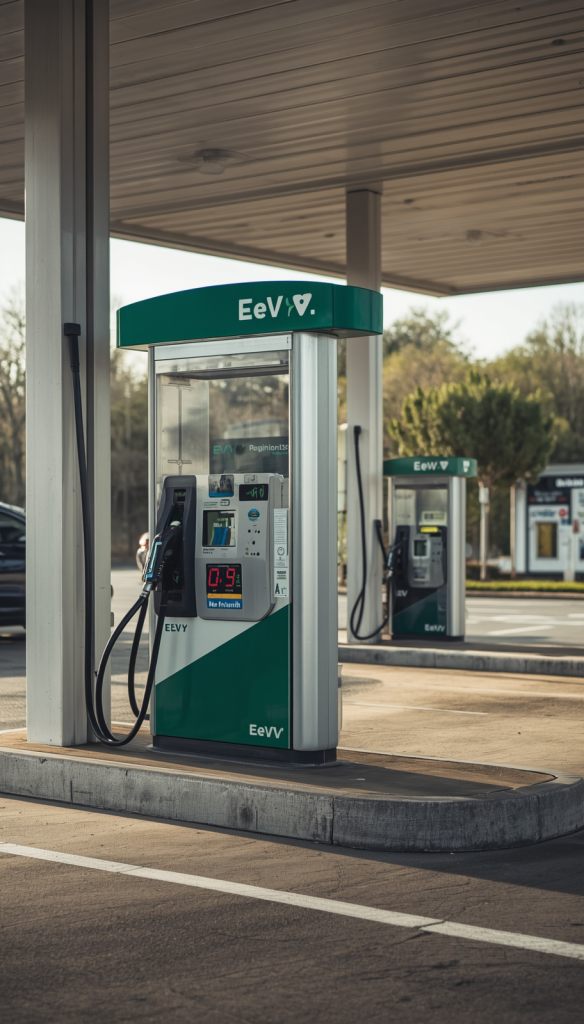
timelines and reduce qualification friction.
The Power Architecture That Determines Conversion Viability
Not every gas station qualifies for the reset. The decisive variable is electrical capacity. A fuel retail environment with strong locational characteristics but constrained power infrastructure has limited conversion value. A fuel retail environment with robust electrical architecture is a high-priority deployment target.
Conversion-ready gas stations must support 480V three-phase power as the baseline service, utility capacity capable of sustained DC fast charging load profiles, substation proximity supporting feasible interconnect timelines, transformer upgrade capability for phased capacity expansion, and load profiles scaling from 300kW into the megawatt range as deployment matures.
Substation proximity is the most decisive variable. Fuel retail environments positioned near existing utility infrastructure move through qualification rapidly because the interconnect pathway is already partially established. Environments requiring extended utility build-out face deployment timelines that delay or disqualify them from near-term vendor pipelines.
The power profile of a gas station determines whether it functions as a strategic conversion asset or remains a legacy fuel site. This is why the gas station reset is not a uniform transition. Some environments qualify for immediate infrastructure participation. Others require coordinated electrical upgrades. Others fall outside the deployment window entirely.
Site Characteristics That Accelerate Conversion
Beyond power, EV vendors evaluate the operational characteristics of fuel retail environments against deployment specifications. Gas stations that meet these specifications convert into charging ecosystems on accelerated timelines.
Conversion-priority gas stations typically offer six to twenty parking or charging stalls within the existing footprint, clear ingress and egress for both passenger vehicles and commercial fleet vehicles, full ADA-compliant access pathways, visibility from interstate exits or primary commercial corridors, fiber connectivity for charging network integration, operational lighting and security infrastructure supporting 24/7 activation, and footprint flexibility for canopy redesign or charging stall layout.
These characteristics determine whether a gas station can be activated as a connected charging node within a coordinated vendor deployment. The question is not whether a site can eventually support charging operations. The question is whether the environment can be operationally integrated into an EV vendor’s network within a defined deployment window.
The Corridors Where Gas Station Conversion Is Accelerating
Locational positioning determines the deployment priority of a fuel retail environment. Specific corridor adjacencies elevate a gas station from a qualified conversion candidate into a strategic infrastructure asset.
Gas stations positioned along interstate corridors with established long-haul vehicle flow, near logistics hubs and regional distribution operations, within airport service corridors and ground transportation zones, along established fleet routes and commercial vehicle pathways, and in transit-adjacent commercial districts are receiving the highest level of vendor attention.
These adjacencies signal direct alignment with the operational corridors where EV charging demand is concentrating. Long-haul electric freight, fleet electrification, autonomous trucking, and intercity electric passenger travel all depend on charging infrastructure deployed along these exact corridors. Fuel retail environments already positioned within them are functioning as the foundation layer of the next-generation mobility network.
The Vendor Categories Recruiting Gas Station Environments
The gas station reset is being driven by specific vendor categories with structured deployment capital and defined infrastructure requirements. Understanding these categories clarifies why fuel retail environments are converting into long-term participation agreements rather than short-term transactions.
The primary vendor categories recruiting gas station environments include commercial EV charging networks building public-access charging ecosystems along high-traffic corridors, fleet charging operators establishing dedicated infrastructure for commercial electrification, autonomous trucking companies developing operational charging corridors for long-haul freight, and municipal partners deploying public-access charging within transportation infrastructure plans.
Each category brings different operational specifications, but all share a common requirement: deployment-ready environments with the electrical capacity, locational intelligence, and operational characteristics needed to support sustained charging operations. Gas stations meeting these requirements are not being marketed in traditional commercial real estate channels. They are being recruited directly into infrastructure participation.
The Operational Outcome of the Gas Station Reset
The gas station reset produces a fundamentally different operational asset than the legacy fuel retail model. The converted environment is no longer a single-purpose dispensing site. It is a connected charging ecosystem capable of supporting multiple revenue streams, vehicle categories, and operational integrations over time.
Post-reset gas station environments typically support DC fast charging operations for passenger and commercial electric vehicles, fleet charging integration for last-mile delivery and regional logistics operators, retail and convenience operations aligned with charging session dwell times, fiber-connected operational coordination with charging network platforms, and phased capacity expansion as regional charging demand scales.
This is the structural difference between a renovation and an operational reset. A renovation updates the existing model. The reset evolves the environment into something the original site was never designed to be — an intelligent infrastructure node operating within a larger connected mobility ecosystem.
Infrastructure Participation Begins With Qualification
The gas station reset is not a future scenario. It is an active deployment cycle, and the environments qualifying for participation are being identified, evaluated, and recruited now. The decisive question for gas station owners, fuel retail operators, and commercial real estate stakeholders is whether their environments are positioned to participate — and at what stage of the deployment cycle they engage.
Resolveify operates as an Intelligent Infrastructure Ecosystem Platform, enabling fuel retail environments to evolve into connected operational assets aligned with EV charging deployment, fleet electrification, and next-generation mobility infrastructure.
To determine whether your gas station environment qualifies for the reset, begin the qualification process here: https://resolveify.com/infrastructure-deployment-qualification/
Frequently Asked Questions About the Gas Station Reset
What is the gas station reset? The gas station reset is the structured operational repositioning of legacy fuel retail environments into connected EV charging ecosystems. It involves electrical upgrades, infrastructure activation, and integration into commercial EV charging networks or fleet electrification deployments.
Why are EV vendors targeting gas stations for conversion? EV vendors target gas stations because fuel retail environments already carry the commercial zoning, ingress and egress patterns, corridor visibility, utility service connections, and operational characteristics that EV charging deployment requires. These pre-existing characteristics compress deployment timelines significantly.
What power capacity does a gas station need to convert into a charging ecosystem? Conversion requires 480V three-phase power, utility capacity capable of sustained DC fast charging operations, substation proximity supporting feasible interconnect, and transformer upgrade capability for phased load expansion from 300kW into the megawatt range.
Which gas stations are converting fastest into EV charging environments? Gas stations positioned along interstate corridors, near logistics hubs, within airport service zones, along established fleet routes, and in transit-adjacent commercial districts are converting fastest because they align directly with the corridors where EV charging demand is concentrating.
Who recruits gas station environments for EV infrastructure deployment? The primary vendor categories include commercial EV charging networks, fleet charging operators, autonomous trucking companies, and municipal partners deploying public-access charging as part of regional transportation infrastructure plans.
How can a gas station owner determine if their site qualifies for the reset? Qualification begins with an infrastructure assessment evaluating electrical capacity, locational adjacencies, site specifications, and operational readiness. Resolveify offers a structured qualification pathway at https://resolveify.com/infrastructure-deployment-qualification/.

Leave a Reply