

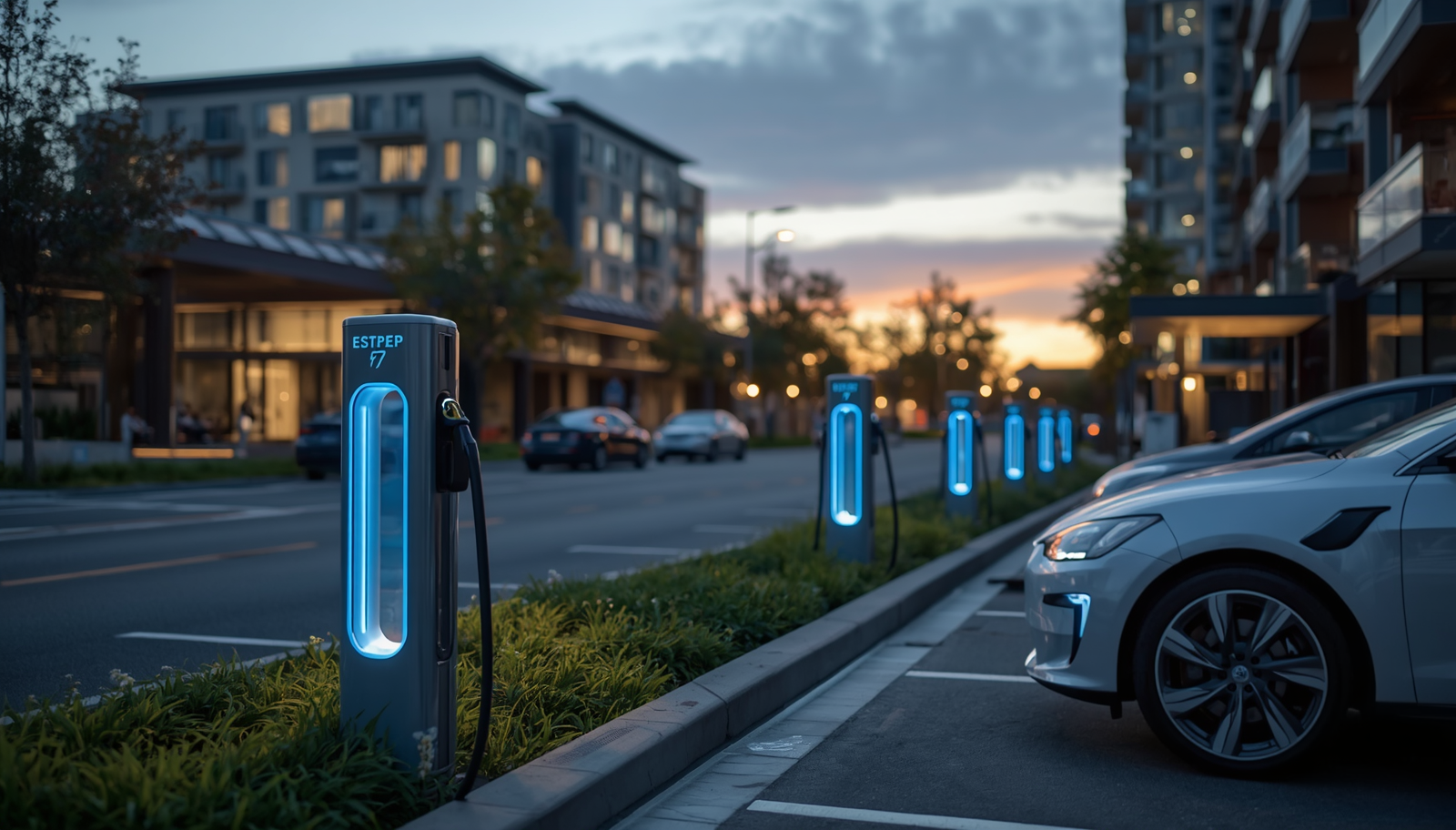
Destination EV Charging Has Moved From Amenity to Infrastructure
The first generation of EV charging conversation framed destination charging as an amenity. Hotels added charging stations to compete on guest experience. Apartment complexes added them to compete on tenant retention. Office parks added them to compete on workplace appeal. The framing was correct for its moment — but that moment has ended.
Destination charging is now operational infrastructure. Hotels, multifamily developments, and office parks are being recruited into structured charging deployment by commercial EV charging networks, fleet operators serving rideshare and last-mile delivery, and hospitality-aligned charging providers building dedicated overnight charging capacity. The environments meeting the operational requirements are entering long-term infrastructure participation. The environments still treating charging as an amenity addition are missing the structural shift underway.
This article defines why destination charging environments have become a deployment priority, the operational characteristics that separate qualified sites from unqualified ones, the vendor categories actively recruiting hospitality, multifamily, and commercial environments, and the infrastructure logic behind the new charging frontier.
Why Destination Environments Offer What Corridor Charging Cannot
Corridor charging — gas stations, truck stops, highway frontage — depends on short, high-volume charging sessions. A vehicle arrives, charges rapidly, and departs. The operational model is built around throughput. Destination charging operates on the opposite model: extended vehicle dwell time aligned with the natural duration the vehicle is already on site.
A hotel guest stays overnight. An apartment resident parks for eight to twelve hours. An office worker parks for a full business day. Each of these dwell patterns aligns with extended charging session windows that corridor environments cannot support. This is the structural reason hotels, apartments, and office parks are being recruited into charging deployment — they offer the one operational variable corridor charging cannot replicate.
Extended dwell time also changes the electrical architecture requirements. Destination charging often operates on lower per-stall power profiles than corridor DC fast charging — but distributed across significantly more stalls and longer session durations. The total infrastructure load is meaningful, but the operational profile is fundamentally different. This is why destination environments require their own qualification framework rather than the corridor charging framework being applied to environments it was not designed for.
The Operational Logic Behind Hotel Charging Deployment
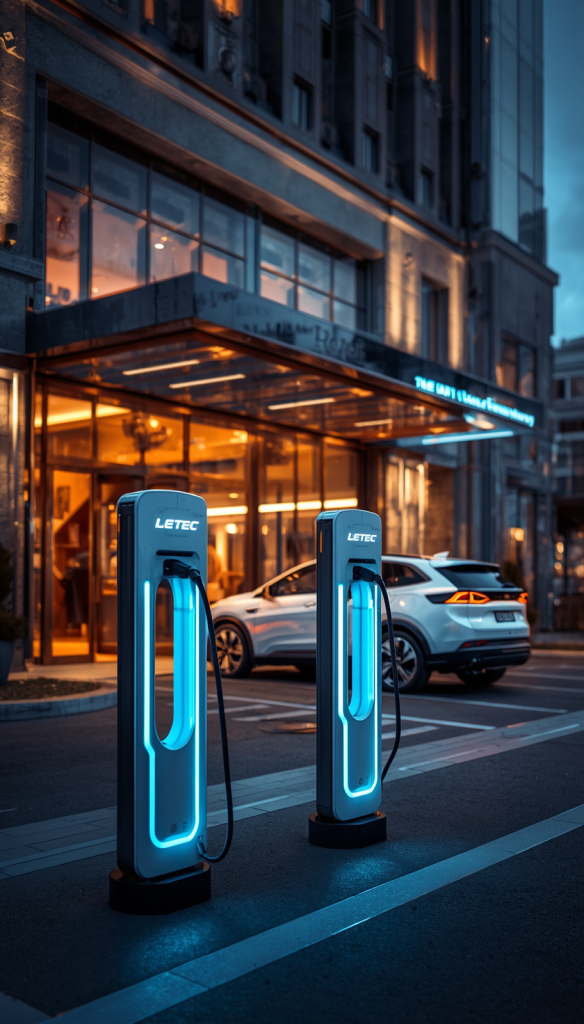
Hotels represent one of the highest-priority destination charging environments for deployment because they combine extended overnight dwell time, established commercial infrastructure, corridor-adjacent positioning, and existing operational systems that integrate naturally with charging operations.
Deployment-ready hotel environments typically offer guest parking capacity sized for charging stall integration, established utility service with upgrade capability, visibility and access supporting both guest and public-access charging, operational lighting and security infrastructure already in place, fiber connectivity for charging network integration, and positioning along travel corridors that align with electric vehicle route planning.
The operational logic is direct. An electric vehicle traveling between cities requires overnight charging that aligns with the traveler’s overnight stay. Hotels positioned along established travel corridors with deployment-ready infrastructure are functioning as the overnight charging foundation for intercity electric travel. This is not an amenity. It is operational infrastructure embedded into the hospitality environment.
The Operational Logic Behind Multifamily Charging Deployment
Multifamily environments — apartment complexes, mixed-use residential developments, condominium properties — represent the largest long-term charging deployment category by stall count. The reason is structural: a significant percentage of electric vehicle owners do not have access to private home charging, and multifamily environments are where that demand concentrates.
Deployment-ready multifamily environments typically offer resident parking capacity sized for phased charging stall integration, electrical service supporting expansion to multi-stall Level 2 and select DC fast charging operations, garage or surface lot infrastructure compatible with charging hardware deployment, operational lighting and security infrastructure aligned with 24/7 resident access, fiber connectivity for charging network integration and resident billing, and locational positioning within metropolitan markets with significant electric vehicle adoption.
The operational logic in multifamily environments is built around resident dwell patterns. Vehicles are typically parked overnight for eight to twelve hours, providing natural charging windows that align with utility off-peak pricing and grid load balancing. This makes multifamily charging deployment one of the most operationally efficient categories of EV infrastructure — supporting both resident charging needs and grid-aligned charging behavior at scale.
The Operational Logic Behind Office Park Charging Deployment
Office parks and commercial campus environments represent the workplace charging deployment category, anchored by full-business-day dwell time and concentrated parking infrastructure. As employer-supported electric vehicle adoption scales, workplace charging is moving from optional amenity into expected operational infrastructure.
Deployment-ready office park environments typically offer employee and visitor parking capacity sized for charging stall integration, established commercial electrical service with upgrade pathway, dedicated parking structures or surface lots compatible with charging hardware deployment, fiber connectivity supporting charging network integration with employer or property management systems, operational lighting and security infrastructure already established, and locational positioning within commercial districts with concentrated electric vehicle commuter activity.
The operational logic in office park environments is built around predictable daytime dwell windows. Vehicles arrive between morning and mid-day, charge throughout the business day, and depart in the evening. This dwell pattern aligns with daytime solar generation profiles where applicable, supports grid load balancing, and provides charging coverage for the segment of electric vehicle owners whose primary daily charging opportunity is at their place of work rather than at home.
The Vendor Categories Recruiting Destination Environments
Destination charging deployment is being driven by specific vendor categories with structured deployment capital and operational requirements distinct from corridor charging vendors. Understanding these categories clarifies why hospitality, multifamily, and commercial environments are entering long-term infrastructure participation rather than short-term equipment installation agreements.
The primary vendor categories recruiting destination environments include commercial EV charging networks expanding into hospitality and workplace charging segments, dedicated destination charging providers building hospitality-aligned overnight charging capacity, multifamily-focused charging operators deploying resident-facing charging infrastructure at scale, fleet charging operators serving rideshare and last-mile delivery vehicles charging at multifamily and commercial environments, and workplace charging providers integrating with employer benefits and commercial property management platforms.
Each vendor category brings different operational specifications, but all share the requirement for deployment-ready destination environments with extended dwell time, adequate electrical capacity, deployment-ready site characteristics, and locational positioning aligned with concentrated electric vehicle demand.
Why the New Charging Frontier Is Operational Infrastructure, Not Amenity
The strategic shift defining the new charging frontier is the move from amenity framing to infrastructure framing. An amenity is a discretionary addition that competes on guest, tenant, or employee experience. Infrastructure is an operational asset embedded into the environment’s long-term function.
Hotels, apartments, and office parks that deploy charging as infrastructure participate in long-term operational agreements, structured vendor relationships, multi-year charging network integration, and scaling pathways aligned with regional electric vehicle adoption. Environments that deploy charging as amenity typically operate stand-alone equipment with no network integration, no long-term operational relationship, and no scaling pathway.
This is the structural separation defining the new charging frontier. The destination environments converting into operational infrastructure are repositioning into the long-term electric vehicle deployment cycle. The destination environments treating charging as a one-time amenity addition remain outside that cycle.
Infrastructure Participation Begins With Qualification
The destination charging frontier is moving through active deployment cycles now, and the hotel, multifamily, and office park environments qualifying for participation are being identified, evaluated, and recruited at increasing pace. The decisive question for hospitality operators, multifamily owners, commercial property managers, and infrastructure stakeholders is whether their environments are positioned to participate — and at what stage of the deployment cycle they engage.
Resolveify operates as an Intelligent Infrastructure Ecosystem Platform, enabling hospitality, multifamily, and commercial environments to evolve into connected operational assets aligned with destination EV charging deployment and next-generation mobility infrastructure.
To determine whether your hotel, multifamily, or office park environment qualifies for destination charging deployment, begin the qualification process here: https://resolveify.com/infrastructure-deployment-qualification/
Frequently Asked Questions About Destination EV Charging Infrastructure
What is destination EV charging infrastructure? Destination EV charging infrastructure is the dedicated charging systems deployed at environments where vehicles naturally park for extended periods — hotels, apartments, office parks, and similar properties. It is structured around extended vehicle dwell time rather than the short, high-volume sessions that define corridor charging.
Why are hotels, apartments, and office parks considered the new charging frontier? These environments are the new charging frontier because they offer the one operational variable corridor charging cannot replicate — extended vehicle dwell time aligned with natural charging session duration. Overnight stays, residential parking, and full-day workplace parking all support efficient charging operations.
How is destination charging different from corridor charging? Corridor charging operates on short, high-power sessions designed for vehicle throughput. Destination charging operates on longer, lower-power sessions distributed across more stalls, aligned with the natural duration vehicles are already on site. The electrical architecture, vendor categories, and operational profiles are different for each.
What power capacity do destination charging environments require? Destination charging typically requires established commercial electrical service with upgrade capability, supporting multi-stall Level 2 deployment and select DC fast charging operations. Total site capacity varies by stall count and vendor specification, but is generally lower per-stall than corridor DC fast charging.
Who is recruiting destination environments for charging deployment? The primary vendor categories include commercial EV charging networks, dedicated destination charging providers, multifamily-focused charging operators, fleet charging operators serving rideshare and last-mile delivery, and workplace charging providers integrating with employer and commercial property management platforms.
How can a hotel, apartment, or office park owner qualify their environment? Qualification begins with an infrastructure assessment evaluating electrical capacity, parking infrastructure, locational positioning, site specifications, and operational readiness. Resolveify offers a structured qualification pathway at https://resolveify.com/infrastructure-deployment-qualification/.

Leave a Reply